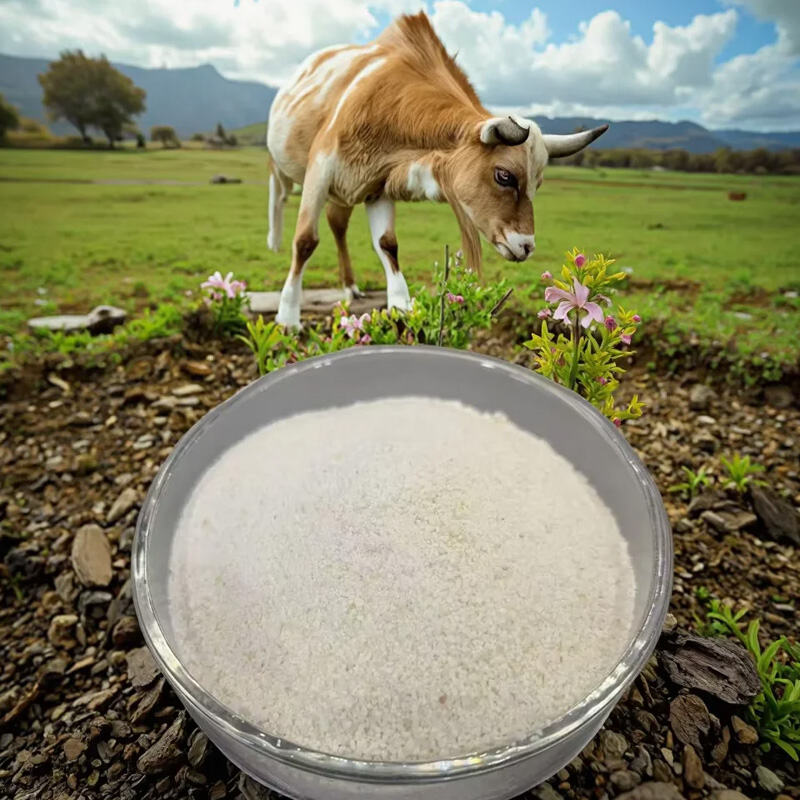
Rice protein powder has become a popular choice in animal nutrition and plant growth supplements due to its high protein content and good digestibility. However, many users find that the effect of rice protein powder varies greatly in practical use, and unstable quality often leads to reduced efficiency in livestock breeding or crop cultivation. In fact, the mixing process is a key link affecting the quality stability of rice protein powder. Through years of cooperation with livestock farms and agricultural bases, I have summed up a set of practical mixing methods that can effectively ensure the stable effect of rice protein powder.
Understand the Basic Characteristics of Rice Protein Powder First
Before starting mixing, it is essential to have a thorough understanding of rice protein powder. High-quality rice protein powder, such as the 70% content product provided by professional manufacturers, has the characteristics of fine particle size, high protein digestibility, and good compatibility with other ingredients. From my experience of helping a large-scale poultry farm optimize their feed formula, I found that many users ignore the water absorption of rice protein powder. If it is mixed with ingredients with high water content without prior treatment, it is easy to cause agglomeration, which affects the uniform distribution of nutrients. According to the research data of animal nutrition experts, the optimal mixing environment for rice protein powder requires a relative humidity of 50%-60% and a temperature of 15°C-25°C. This can prevent the powder from absorbing moisture and caking, and ensure the activity of nutrients.
Prepare Materials and Equipment to Lay a Foundation for Stable Mixing
The preparation work before mixing directly affects the final effect. In terms of materials, it is necessary to select auxiliary ingredients that are compatible with rice protein powder. For example, when used in animal feed, it can be mixed with corn gluten meal, dicalcium phosphate, and other ingredients. These ingredients have similar particle sizes and physical properties to rice protein powder, which helps to improve mixing uniformity. It should be noted that all materials must be sieved before mixing to remove impurities and large particles. I once encountered a case where a pig farm did not sieve the rice protein powder and other feeds, resulting in uneven mixing and some pigs not getting enough protein intake, leading to slow growth. In terms of equipment, it is recommended to use professional horizontal mixers or vertical mixers with adjustable speed. According to the recommendations of the Feed Processing Technology Association, the mixing speed should be controlled at 30-60 revolutions per minute, and the mixing time should not be less than 10 minutes to ensure that all ingredients are fully integrated.
Master the Correct Mixing Sequence and Proportion
The mixing sequence and proportion are crucial to the quality stability of rice protein powder. The correct sequence should be to add large-particle ingredients first, then medium-particle ingredients, and finally rice protein powder and other fine-particle ingredients. This can avoid the fine rice protein powder from floating on the surface or sinking to the bottom, ensuring uniform distribution. In terms of proportion, it is necessary to strictly follow the nutritional needs of different animals or crops. For example, when used in aquaculture feed, the addition ratio of rice protein powder is usually 15%-25%, while in poultry feed, it can be adjusted to 10%-20%. In a cooperation project with an aquaculture base, we adjusted the proportion of rice protein powder according to the growth stage of fish, and combined it with appropriate mineral additives. As a result, the survival rate of fish increased by 12%, and the growth cycle was shortened by 8%. Experts from the International Association of Animal Nutrition point out that the reasonable proportion of rice protein powder and other nutrients can maximize its nutritional value and ensure stable product quality.
Control the Mixing Process and Avoid Common Mistakes
During the mixing process, strict control of various parameters is required to avoid common mistakes. First of all, the loading capacity of the mixer should be controlled at 60%-80% of its rated capacity. Too much or too little material will affect the mixing effect. Too much material will lead to insufficient space for ingredients to move, resulting in uneven mixing; too little material will cause the ingredients to collide insufficiently, also affecting uniformity. Secondly, avoid adding materials during the mixing process, which will destroy the formed mixing state and lead to local unevenness. I have seen a crop nutrition company that added rice protein powder midway when preparing water-soluble fertilizers, resulting in uneven nutrient distribution in the final product, and some crops showed nutrient deficiency symptoms after application. In addition, after mixing, the mixture should be packaged and stored in a timely manner. The packaging should be moisture-proof and airtight to prevent the rice protein powder from absorbing moisture and deteriorating, which affects its quality stability.
Conduct Post-Mixing Inspection and Effect Tracking
After the mixing is completed, it is necessary to conduct sampling inspection to ensure that the quality meets the requirements. The inspection items include mixing uniformity, nutrient content, and moisture content. The mixing uniformity can be tested by the tracer method. According to the national feed quality standards, the coefficient of variation of mixing uniformity should be less than 7%. For the nutrient content, it is necessary to detect the protein content, amino acid composition, and other indicators to ensure that they are consistent with the preset formula. At the same time, long-term effect tracking should be carried out. For example, in livestock breeding, observe the growth status, feed conversion rate, and disease resistance of animals; in crop cultivation, record the growth rate, yield, and quality of crops. Through continuous data collection and analysis, adjust the mixing parameters in a timely manner. A large-scale agricultural cooperative we cooperate with conducts regular inspections and tracking. By optimizing the mixing process, the quality stability of rice protein powder has been significantly improved, and the comprehensive benefit has increased by more than 15%.
In conclusion, ensuring the stable quality effect of rice protein powder requires mastering scientific mixing steps. From understanding the characteristics of the product, preparing materials and equipment, mastering the correct sequence and proportion, controlling the mixing process, to conducting post-mixing inspection and tracking, every link is indispensable. Only by combining professional knowledge with practical experience, and strictly following scientific methods, can we maximize the nutritional value of rice protein powder and provide reliable support for animal breeding and crop cultivation.
 EN
EN