Apple pomace feed has high application value in ruminant farming. Fresh apple pomace is rich in soluble nutrients and moisture, and can replace part of the roughage or concentrate in the daily diet of cattle and sheep, effectively reducing breeding costs and improving overall economic efficiency. Related studies have confirmed that adding appropriate amounts of apple pomace to the diets of dairy and beef cattle can significantly increase milk production, milk protein content, and animal weight gain without significantly adverse effects on their health. For ruminants such as sheep, adding appropriate amounts of apple pomace can also increase feed intake and average daily weight gain; however, excessive use can interfere with the normal physiological function of the rumen, so its addition ratio needs to be scientifically controlled.
Dried apple pomace, due to its good palatability and ease of storage and transportation, has been widely used in cattle and sheep fattening and calf feeding. Studies have found that apple pomace can replace some traditional feed ingredients such as corn and bran, and within a reasonable proportion, can maintain normal animal growth performance and feed conversion efficiency. For calves, weaned lambs, and fattening cattle, adding appropriate amounts of dried apple pomace can not only reduce feed input costs but also ensure good weight gain and carcass quality. Furthermore, the processing methods for dried apple pomace are flexible, allowing for a combination of natural sun-drying and artificial drying, depending on local conditions. This improves resource utilization and reduces nutrient loss.
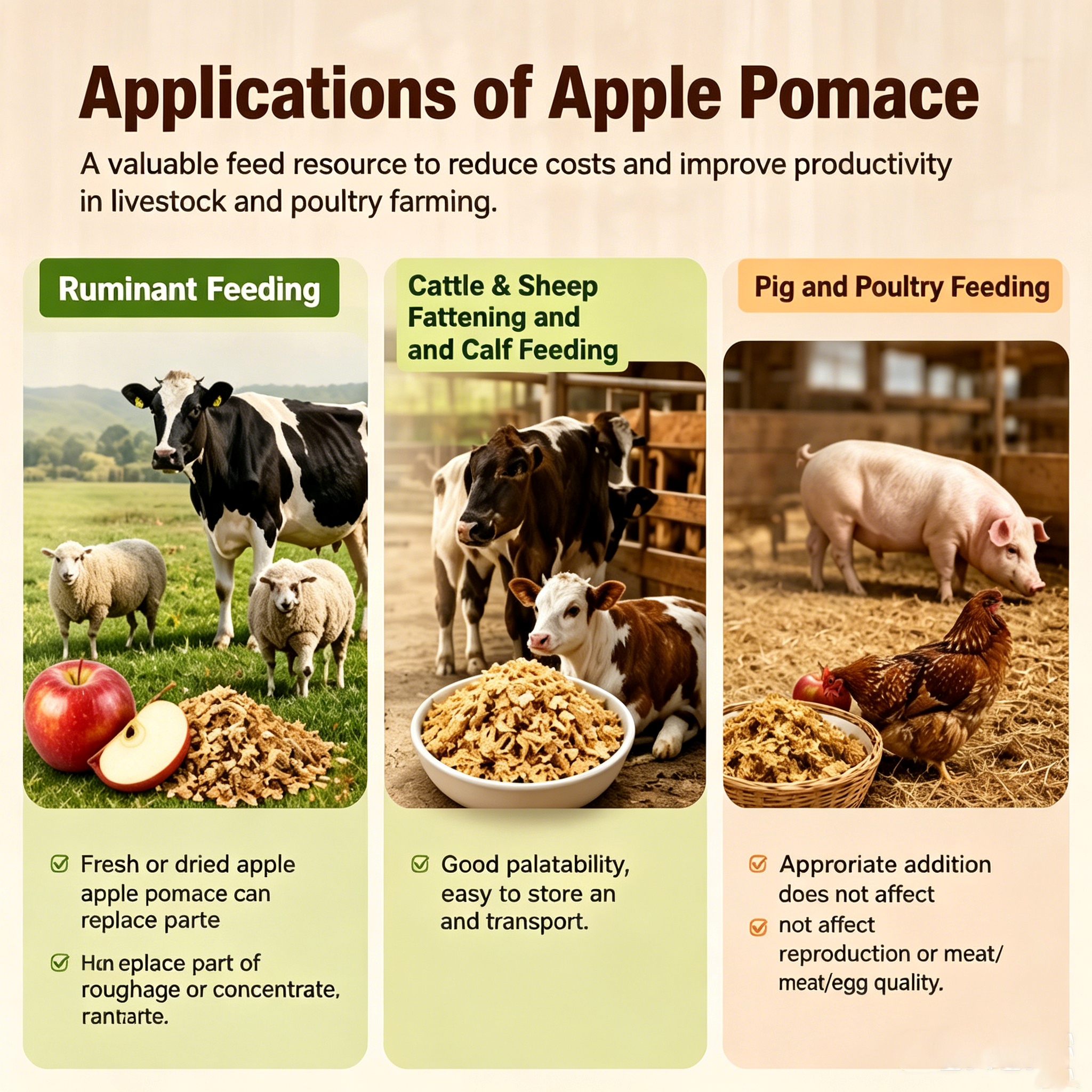
In pig and poultry farming, apple pomace feed also shows good application potential. Studies have shown that adding appropriate amounts of apple pomace to the diets of growing pigs and sows does not negatively impact their reproductive performance or meat quality, while also reducing farming costs and improving the digestibility and absorption efficiency of some nutrients. For laying hens, at appropriate addition levels, apple pomace does not affect egg production rate, egg weight, or feed conversion ratio, making it a cost-effective feed ingredient. However, given the high fiber content and unbalanced nutrient composition of apple pomace, the addition ratio must be carefully controlled in practical applications, and it should be combined with phosphorus and limiting amino acids to ensure optimal feeding results.
 EN
EN