Phosphorus plays a vital role in animal growth. Phosphorus deficiency in feed can lead to rickets and pica in young animals, osteomalacia in adult animals, decreased eggshell quality in poultry, abnormal estrus and infertility in female livestock, and decreased milk production in dairy animals. Studies have shown that phosphorus plays a positive role in animal growth and development, including bone and teeth growth, nutrient metabolism, energy transfer and storage, and nucleic acid composition. However, improper phosphorus use can also cause harm such as abnormal calcium and phosphorus metabolism, algal blooms, and red tides.
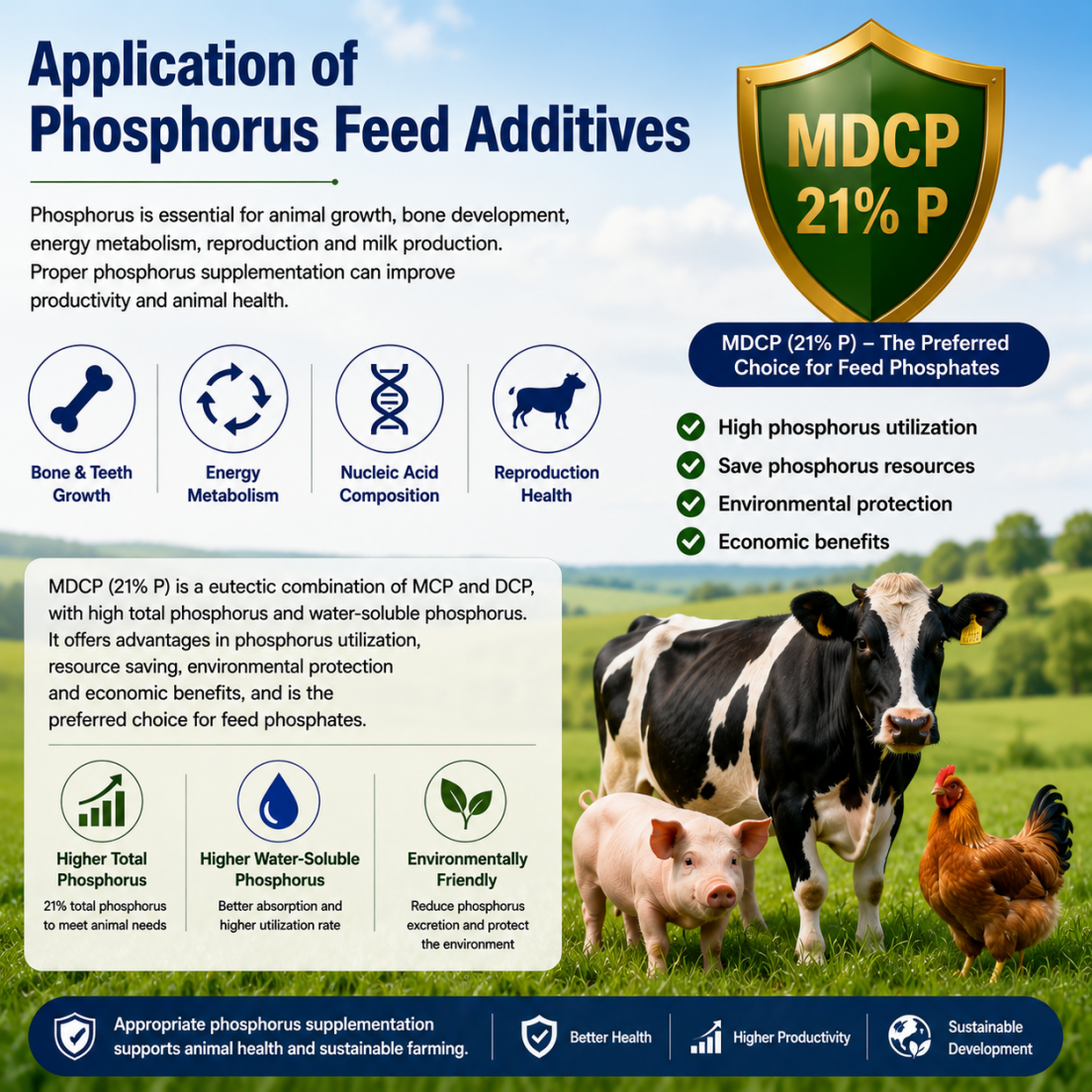
Currently, the main phosphates used in domestic feed are dicalcium phosphate (DCP) and calcium dihydrogen phosphate (MCP). DCP is slightly soluble in water, and livestock and poultry have a low phosphorus utilization rate (<60%). While MCP has high water solubility (20%), its price is typically 1.5-2 times that of DCP. Dicalcium phosphate (MDCP) is a eutectic combination of MCP and DCP, with a total phosphorus content of 21%. It is widely used in Europe and America, but is still in the promotion stage in my country.
Judging from the current status of feed phosphate application in Europe, America and China, dicalcium phosphate (MDCP, 21%P) has obvious advantages in terms of phosphorus utilization, saving phosphorus resources, environmental protection and economic benefits due to its high total phosphorus and water-soluble phosphorus content. It is gradually becoming the first choice for feed phosphate.
 EN
EN