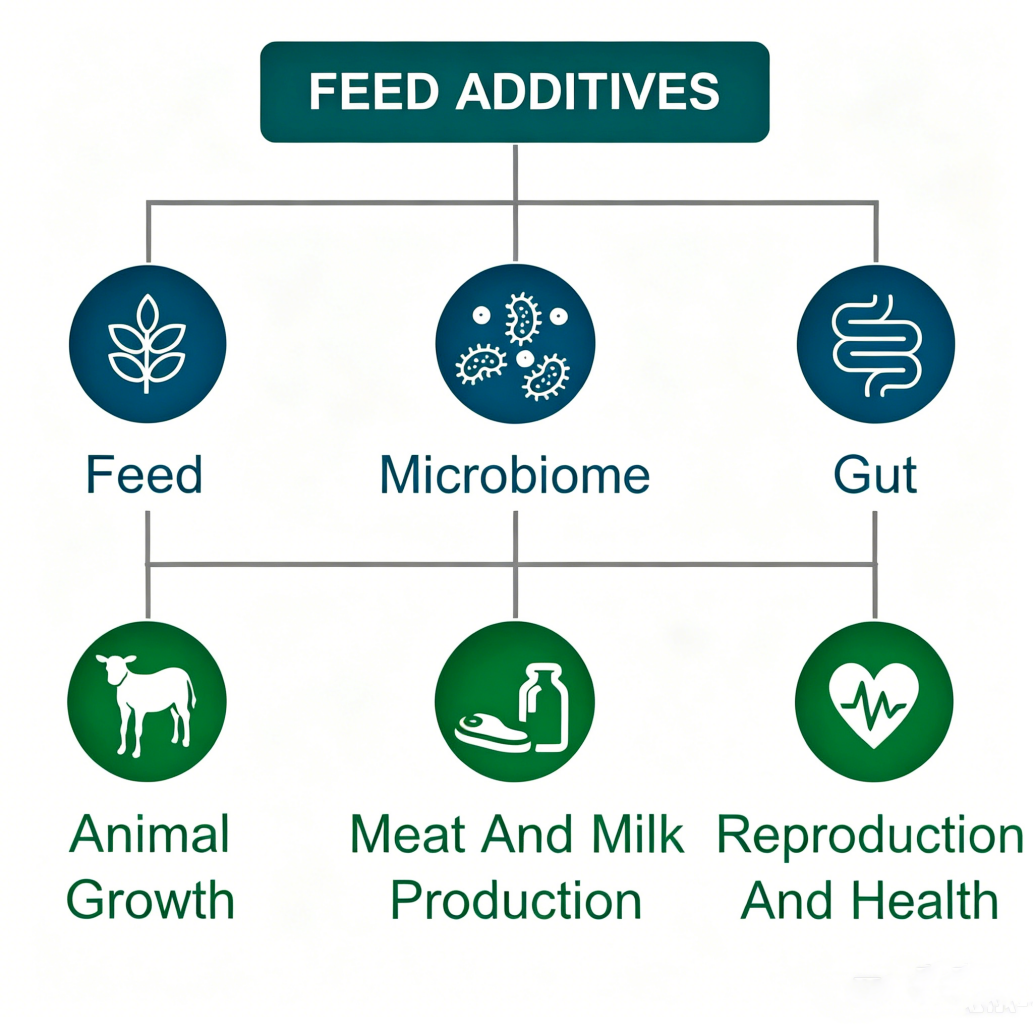
Feed additives are a class of specialized substances introduced during the processes of feeding, feed processing, and storage. Although the quantities used are minute—sometimes constituting merely a few parts per million of the feed, or even less—their impact is profound. They serve multiple functions, including supplementing or balancing dietary nutrients, preventing disease, promoting sheep growth, safeguarding feed quality, and boosting the yield of sheep products. The scientific application of feed additives effectively increases the output of sheep products, enhances feed utilization efficiency, conserves feed resources, and reduces production costs, thereby achieving the dual objectives of increased production and income. Investing in feed additives requires minimal capital outlay while yielding substantial returns.
Feed additives for sheep can be broadly categorized into the following two major groups:
(1) **Nutritional Additives:** These primarily include non-protein nitrogen additives, amino acid supplements, trace mineral elements, and vitamin additives. Their primary function is to supplement or balance essential nutrients and to support normal physiological functions.
(2) **Non-Nutritional Additives:** These additives possess no nutritional value in themselves; however, they serve to enhance physical health, stimulate metabolism and growth, participate in digestive and neurological regulation, improve the quality of feed and animal products, or increase product yields. Specifically, they are further subdivided into the following categories:
① **Health-Promoting and Growth-Enhancing Additives:** These mainly comprise antibacterial growth promoters, anthelmintics (dewormers), traditional Chinese herbal additives, enzyme preparations, and microbial preparations.
② **Physiological Regulation Additives:** These include rumen metabolism regulators, buffering agents, and organic acid additives.
③ **Feed Quality Improvement Additives:** These primarily consist of antioxidants, anti-mold and preservative agents, silage additives, roughage conditioning agents, and palatability enhancers. They are utilized to protect and improve feed quality, stimulate appetite, and enhance the digestibility and utilization of feed.
(3)**Anti-Stress Additives:** These include minerals, fats, vitamins, and sedatives. Their primary purpose is to bolster the animal's resistance to stress responses and to enhance its ability to adapt to environmental changes.
 EN
EN