Amino acids are the fundamental building blocks of proteins. Proteins consumed by chickens must be broken down into various amino acids before they can be absorbed and utilized by the body. A deficiency in any specific amino acid impairs protein synthesis within the chicken's body, leading to stunted growth, weight loss, physical weakness, reduced egg production rates, and other adverse effects that result in economic losses.
The amino acids that constitute proteins fall into two major categories. The first category consists of amino acids that the chicken's body cannot synthesize—or, even if it can synthesize them, the rate and quantity of synthesis are insufficient to meet the bird's needs; these must, therefore, be supplied through feed and are known as **essential amino acids**. The second category comprises amino acids for which the body's requirement is low, or which can be synthesized internally from other substances; these do not need to be supplied via feed and are termed **non-essential amino acids**.
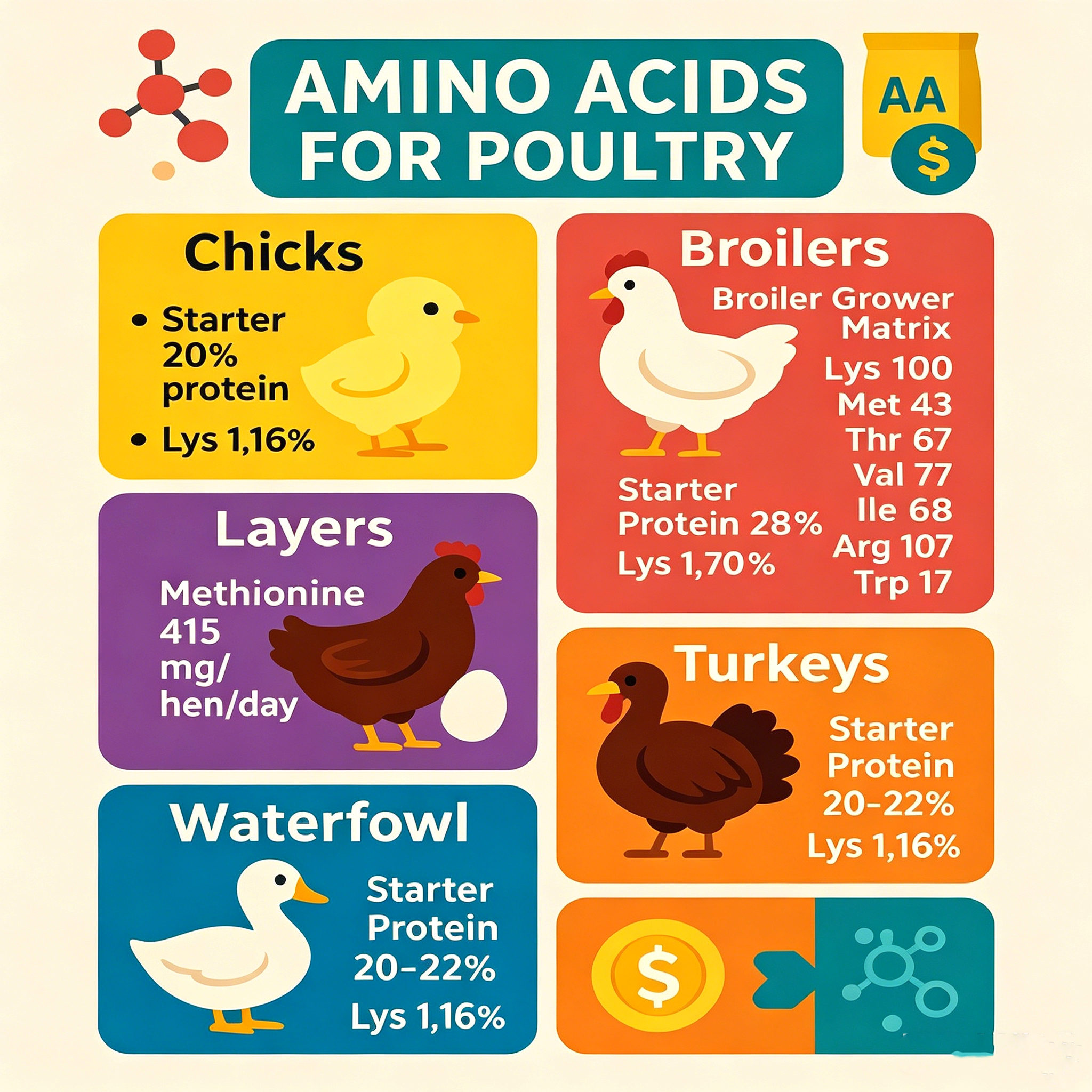
Currently, 13 amino acids are recognized as essential for chickens: arginine, lysine, histidine, methionine, cystine, tryptophan, phenylalanine, tyrosine, leucine, isoleucine, threonine, glycine, and valine. Among these, lysine, methionine, and cystine are the amino acids typically given primary consideration when formulating chicken feed.
In addition to the classification of essential amino acids, the concept of **limiting amino acids** is also significant within amino acid taxonomy. This is because animals require various amino acids in specific, fixed proportions. Consequently, when certain amino acids are deficient, the body can only utilize a proportional fraction of the other available amino acids; the remainder goes to waste. These amino acids—which are prone to deficiency and thereby restrict the utilization of other amino acids—are referred to as **limiting amino acids**. In the corn-soybean meal-based diets commonly fed to chickens, methionine is the **first limiting amino acid**, while lysine is the **second limiting amino acid**; therefore, particular attention must be paid to these two amino acids when formulating feed rations.
 EN
EN